
The Hidden Cost of Ignoring Soft Skills in Leadership Development
Most leadership programs optimize for operations, technical depth, and short-term financials while undervaluing the soft skills that sustain performance. Emotional intelligence, communication, empathy, and adaptability form the infrastructure of trust, engagement, and innovation. Evidence is clear: high EQ leaders are top performers; disengagement drains trillions; and Google’s Project Aristotle showed that psychological safety, not technical prowess, predicts team success. When EQ is missing, fear rises, ideas stall, and silos harden. Forward-looking companies embed empathy, coaching, and leadership into development and measurement. The future blends performance with presence through real-time feedback, peer input, and experiential practice that build cultures retaining talent.
LEADERSHIPLEADERSHIP DEVELOPMENTEMOTIONAL INTELLIGENCESOFT SKILLSORGANIZATIONAL CULTURE
10/24/20252 min read

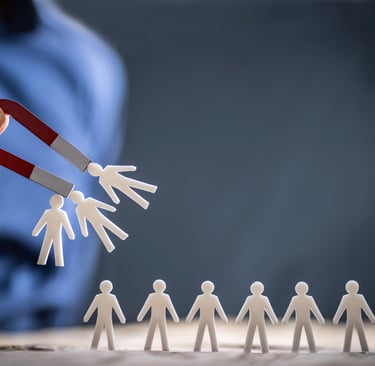
In countless organizations, leadership development still centers around operational efficiency, technical expertise, and financial outcomes. Yet beneath these metrics, a costly oversight continues to erode teams from the inside: the neglect of soft skills. Emotional intelligence, communication, empathy, and adaptability are often treated as nice-to-haves rather than core competencies. But when leaders lack these skills, the effects ripple outward—resulting in high turnover, disengaged teams, and a fragile culture where innovation struggles to take root.
he Business Case for Soft Skills
The data tells a compelling story. Studies from TalentSmart show that 90% of top performers exhibit high emotional intelligence, while Gallup reports that disengaged employees cost the global economy $8.8 trillion annually. Organizations that prioritize soft skills outperform peers in employee satisfaction, innovation, and retention. Google’s Project Aristotle, for example, found that the highest-performing teams were not the most technically proficient, but the ones with the strongest interpersonal connections and psychological safety. These findings are not anomalies—they reflect a fundamental shift in what drives sustainable success.
What Happens When Leadership Lacks EQ
Leaders who are unable to listen, connect, and empathize create environments where fear and confusion flourish. Employees become reluctant to share ideas or feedback, collaboration breaks down, and organizational silos deepen. These issues, while often invisible on spreadsheets, show up in poor team morale, rising burnout, and diminished innovation. In such climates, even the best strategies falter because execution depends on human connection. And without emotional leadership, that connection weakens or disappears entirely.
Companies Paving the Way with Human-Centered Leadership
Forward-thinking organizations are embedding soft skills into the DNA of their leadership development. Salesforce offers empathy and coaching workshops as part of its leadership pipeline. Microsoft evaluates its managers not just on results, but on how well they build inclusive, trusting teams. These companies recognize that people don't quit jobs—they quit toxic environments, often shaped by emotionally tone-deaf leadership. By training for emotional intelligence, they’re not only developing better managers but also nurturing cultures that retain top talent.
Redesigning Leadership Development for the Future
The future of leadership lies in the balance between performance and presence. Organizations must move beyond one-dimensional metrics and begin evaluating leaders on how they engage and elevate their teams. This means incorporating real-time feedback, peer evaluations, and experiential learning focused on empathy, conflict resolution, and active listening. When leaders embody these skills, they create environments where creativity thrives, loyalty deepens, and performance becomes a shared endeavor rather than a personal benchmark.